“This is a smooth pitch,” I thought to myself, “but something’s off.”
I was sitting on a Zoom call for a new options program. It was the kind of “get rich steady” pitch that I like. High-pressure, in your face, “it worked for me so it can work for you if you just work hard enough” pitches turn me off.
Which was probably by design to keep people like me listening.
Sure, there was a Navy SEAL serial entrepreneur to give credit to starting successful businesses. There was the nuclear engineer partner to give heft to the algorithm.
And 100% of the testimonials were from copywriters. Even non-quant people can make this trade regularly and make money!
And all of us on the call really, REALLY wanted a way to support our lifestyle with extra income.
What was different from listening to this pitch and other investment product pitches was the benefit of experience. I’ve been trading options spreads for 4 years now and options for 15.
The system boasted slow, steady, incremental wins with negative movements only from withdrawals. But I have the experience to know that won’t happen all the time. While the system rode out some recent market drawdowns, it takes wisdom to know when to sit out.
Why? Because you know you’re going to have to work even harder to make your money back.
Options Wheel in a nutshell
That’s not to say the methodology is bad. Using an options wheel strategy makes sense when the market is moving up. Historically, the market moves up or, as they say: “Bulls climb the stairs.”
To use this strategy, you sell a put against a stock that you have enough cash to buy 100 shares of. For example, 100 shares of a $10 stock means you need $1,000 in your account. This is also known as a cash-secured put. If the stock keeps going up, the value of the put goes to zero, and you keep the premium.
If the stock goes down, though, you may have to buy those 100 shares at a price higher than the market is offering for it. As they also say: “Bears fall out the window.”
Sure, you can keep selling covered calls against your newly purchased stock as the value continues to drop. But as volatility evens out, those values start dwindling. So you put in the same amount of effort while receiving less and less.
Truth is, the thought of a loss is seven times more powerful than that of a potential gain. And now your decision will haunt you for as long as you hold that position.

(credit: Microsoft Copilot)
Worse, it may not go back up with the rest of the market. You’ll end up managing it for months to years while other stocks go up with little to no effort.
Put it into practice
Here’s an example from my portfolio.
Two years ago, I bought 100 shares of Marten Transport at $21/share. It was hot at the time. Too many goods to move post-COVID reopening and not enough truckers to get them there had customers paying hefty premiums.
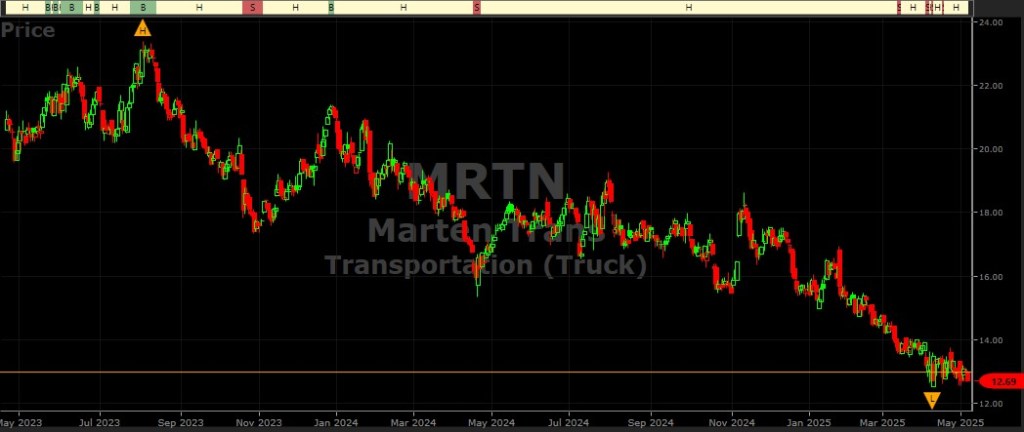
(credit: VectorVest)
I started selling covered calls on it and activated dividend reinvestment. Because of that management, I only lost about 25% of what I could have.
Hey, trends don’t last forever. But it’s still going down and could have a lot farther to fall.
Ultimately, it’s more work and less reward than buying quality stocks in an upward trending market. Do that enough times and you optimize your brain around working yourself out of a hole instead of enjoying the time that minimal input system was supposed to afford you.
I lost most of my life’s savings and a good chunk of home equity figuring that out. An expensive lesson, but a valuable one.
The problem with a system like this is it doesn’t tell you when to NOT jump in. Or when you should take less profit than you expect rather than holding on through the big drop on the horizon.
Telling the rest of the market’s story
Now, for someone completely new to trading, the program in the pitch is not a bad start. And it will even work well to provide income when the market moves up and to the right.
But after you’ve had to buy a falling stock at a price higher than its market value, would you rather be reminded of how much work you must do to get back to even? Or would you rest better knowing when to buy, what to buy, and when to sell?
That’s exactly what I’ve gotten from my 5 years with VectorVest.
Their proprietary timing model kept me out of the Ukraine/rate hike down trend of 2022-23 as well as the Liberation Day crash.

(credit: VectorVest)
When the market turned around, their searches on the app allowed me to add to my portfolio without skipping a beat at work. They’ve even trained me on how to size positions so I make money regardless of my win/loss ratio.
They also have a whole roster of coaches who have traded professionally for 20+ years. Each of them has helped me with steady guidance in the Daily Color Guard report. This check in cuts through the noise with “go/no go” guidance suitable for your investment type.
When you join VectorVest, even on a trial, you get access to their Secrets of Successful Investing Course. It teaches you what kind of investor you are so you know what stocks to look for and the right time for you to jump in.
And with over 9,000 stocks in their database, you can avoid the obvious pump-and-dump schemes other influencers peddle.
All for a base package that’s less than your internet bill.
Don’t settle for a model with blind spots that keep you working hard after the down market ends. Start a VectorVest trial today and see what you’re missing.
(NOTE: affiliate link, I may be compensated for any purchases you make)
Did this post keep you out of hot water while looking to support your family? If you want more, subscribe today and be the first to get new articles directly in your inbox.
Check out these related posts next:
 Liberty Begins At Home
Leave a reply to Three ways to better leverage your savings – Liberty Begins At Home Cancel reply